
Decluttering Defined: Paper Clutter
Paper clutter is something we all deal with. It is so hard to know how long to keep practical papers (bank statements, taxes, etc) as well as sentimental paper clutter (greeting cards, kid art projects, etc). The truth is, most of us are keeping documents far longer than we need to. Here are some practical guidelines to help you decide what to dispose of, when to do it, and how to do it securely.

Guidelines by Type of Document
Let’s start with the biggest one: Income Tax Returns. When it comes to prior year tax document retention, I always heard that the magic number for retaining documents is 7 years. It turns out that might not be correct. The IRS has really helpful guidance on their website that I have copied below. If you’d like more information or to see these details directly from the source, see the linked IRS website.
- Keep records for 3 years if situations (4), (5), and (6) below do not apply to you.
- Keep records for 3 years from the date you filed your original return or 2 years from the date you paid the tax, whichever is later, if you file a claim for credit or refund after you file your return.
- Keep records for 7 years if you file a claim for a loss from worthless securities or bad debt deduction.
- Keep records for 6 years if you do not report income that you should report, and it is more than 25% of the gross income shown on your return.
- Keep records indefinitely if you do not file a return.
- Keep records indefinitely if you file a fraudulent return.
- Keep employment tax records for at least 4 years after the date that the tax becomes due or is paid, whichever is later.
The guidelines feel simple enough. The IRS has just released you from 40 years of tax return paper clutter. Congratulations!

Insurance Documents
Most insurance policies renew every year. For that reason, you can keep insurance policy documents until you renew your policy again. Then, you can get rid of the prior policy documents and bills. If you would find it important to compare coverage year-to-year, you can keep a couple years of documents.
Other Bills
There are some categories of documents that you can get rid of as soon as you’re sure they have been resolved and/or your payment has cleared. These would be things like credit card statements, utility bills, and bank statements.
I would recommend keeping any document related to loan payoffs for a longer period of time. For example, if you pay off your house or car, keep your loan satisfaction letter until you sell that asset. You don’t want to be caught off guard if you paid something off only to find out later that somewhere along the way, that loan company lost their record of your payoff. I have heard of it happening with at least 1 homeowner who wasn’t able to sell their home because a mortgage satisfaction wasn’t properly recorded and the homeowner had thrown out the letter stating it was paid off.
Legal Documents
Some documents you need to keep forever. These documents are the legal documents that govern your life. Think your marriage license, Social Security card, trust documents, will, etc.
You might also have some legal documents that apply to something you own, such as a car or house. You will want to keep any related documents (deeds, titles, etc) while you own the thing the document applies to. If you sell that asset, you can then dispose of the document.
Sentimental Papers
You probably have greeting cards, love letters, kid school projects and more that you’re hanging onto. As with anything sentimental, some things you’ll probably never get rid of and that’s ok. But there comes a point where we need to be a bit more discerning with what stays in our homes. 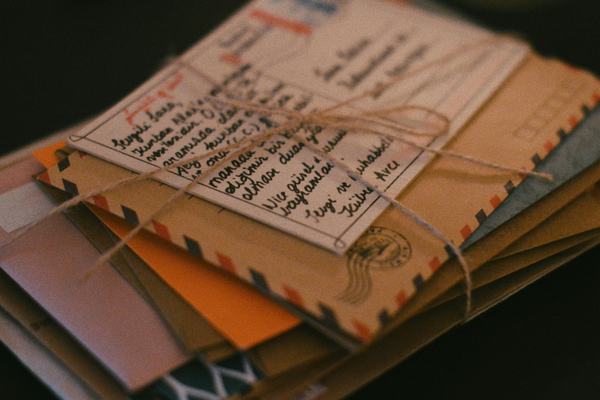
If you have a lot of kid artwork, are you displaying it somewhere? Or does it sit in a box that you haven’t touched in years or looked through? For things you’re using on a regular basis, keep using them. For things that you’re not paying much attention to, consider digitizing them if you can’t bear to part with them. Or give them to the person who originally made the item.
Greeting cards can be tough as well. You will probably have to make some choices. If you tend to get a card from the same family member each year, pick 1 or 2 of your favorites to keep. Cards that have very personalized messages in them might be a good fit to hang onto. Otherwise, if you like the artwork of the card, consider separating it from the message and framing it for your wall. Or if you like the message in the card but don’t care about the card art, separate the message and dispose of the other half of the card.
Game Plan
Digitize it
If you’re feeling apprehensive about disposing of your papers, you could take an in-between approach and digitize your paper clutter. You can do this by scanning the documents and saving them on your computer, in the cloud, or on an external drive of some sort. If this sounds like more work than you want to take on, let that guide you and help you rationalize a bit. If a paper file doesn’t feel worth the work of digitizing it, maybe that’s a sign that you really don’t need it.
Shredding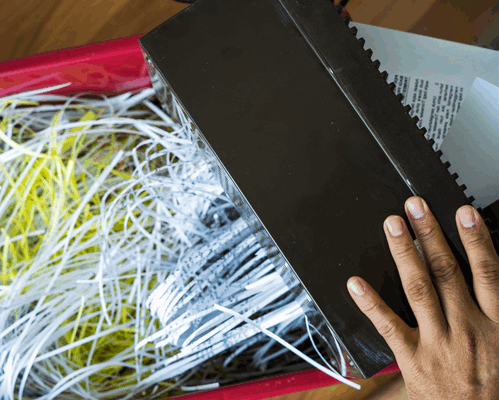
You can shred things yourself, but more than likely, with a massive decluttering sort like this, you might have to call in professional help. Most at-home shredders can only shred for so long before they need to take a break to cool down, so at the very least, you’ll need to plan to do your shredding in multiple shifts if you want to do it at home.
If you need professional help, let’s start with the free options. Many local banks, municipalities, and other businesses will host a shred fest once a year that is open to the public. In order to accommodate as many people as they can, shredding might be restricted to a certain amount of bags or boxes per person. To find a shred fest near you, Google “Shred Fest near <city name>” and see what comes up.
If you’d prefer to get all your shredding dropped off in one trip, you can pay to have your documents shredded at places like UPS, Staples, or your local waste disposal company. Some companies will even bring a bin to you (like renting a dumpster) that you can take your time filling up. Then when it’s full, they will come back and shred it for you, either on-site or at a secure facility.
If you need the names of specific companies who can help with shredding in the area, please reach out to us and we’d be happy to connect you with our Downsizing Directory Vendor List.
Keeping Current
Once you’ve taken all this time and effort to update your filing cabinet, make sure to stay on top of your paper clutter in real time. Follow the guidelines to keep rotating out old documents as you add new ones. For example, once you file your most recent taxes in your filing cabinet, move your oldest file to your shred pile.
Thankfully, the clear guidelines surrounding paper storage can make clearing paper clutter one of the easier parts of your downsizing journey. Good luck!

Recent Posts